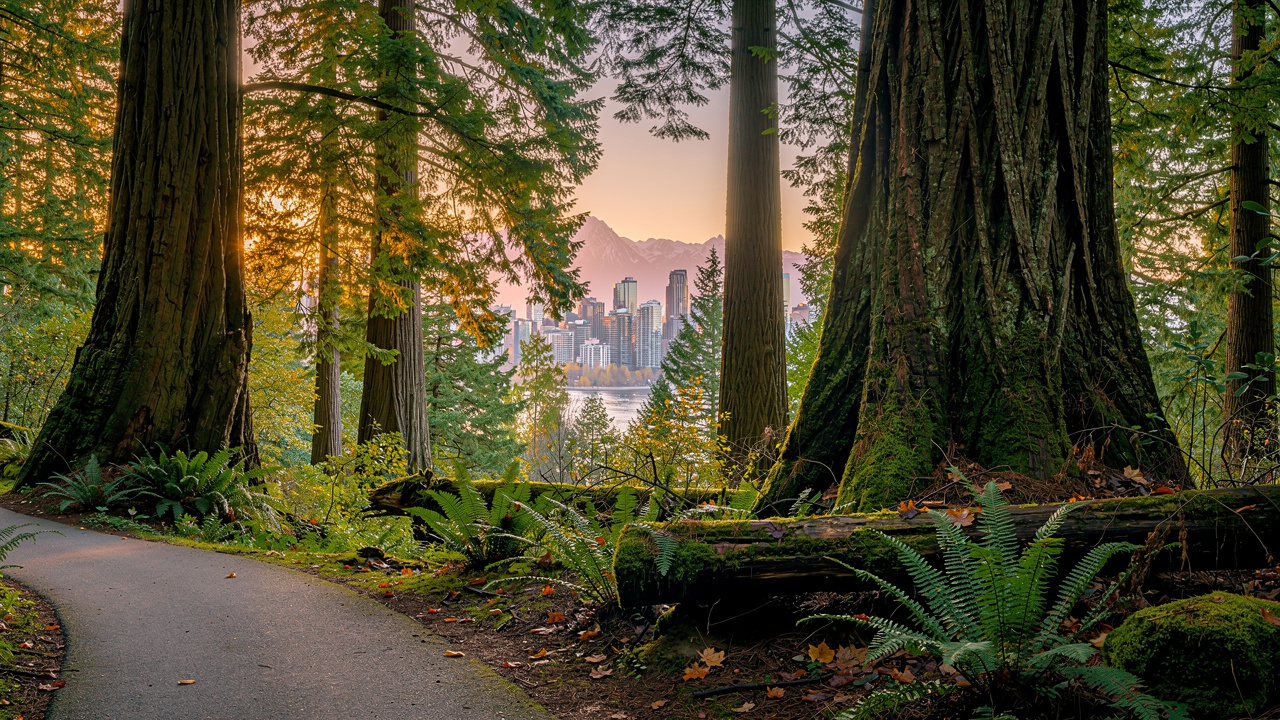
Stanley Park is the green heart of Vancouver, a huge oceanside forest of tall cedars, mountain views, and local history. This guide covers the best things to see on a first visit, from the Seawall to the Totem Poles and Vancouver Aquarium, plus wildlife, safety tips, planning advice, and how Nomi Homes can be a relaxed home base nearby.
Key Takeaways
This quick overview covers the main points from this Stanley Park guide before we dive into details.
The park covers 405 hectares with forest, historic monuments, and coastal viewpoints. About half a million trees grow here, many taller than nearby buildings, so plan for longer walking distances.
The 8.8‑kilometer Seawall is the easiest way to see the park. Walking or cycling this route brings nonstop ocean scenery, mountain views, and access to beaches and landmarks.
Highlights such as the Totem Poles, Vancouver Aquarium, Lost Lagoon, Siwash Rock, and the 9 O’Clock Gun add stories about First Nations art, marine life, and local traditions, turning a simple walk into a richer visit.
What Makes Stanley Park So Special

The park holds about half a million trees, including Douglas fir, western red cedar, and Sitka spruce. Trees here can reach around 76 meters and be centuries old.
Across its 405 hectares, the park is surrounded by the waters of Burrard Inlet and English Bay, so ocean views appear around many corners.
This peninsula is part of the traditional territory of Coast Salish peoples, including the Squamish and Musqueam Nations. The Squamish village of X̱wáýx̱way once stood near what is now Lumberman’s Arch, with cedar houses facing the water. Many features, such as Siwash Rock, carry names and stories rooted in Squamish oral history.
In 1988 Stanley Park was designated a National Historic Site of Canada, a reminder that this is a living mix of forest, shoreline, and layered history.
Top Highlights and Attractions You Shouldn’t Miss

The Seawall is the classic way to experience the park. This 8.8‑kilometer path circles the shoreline with separate lanes for walkers and for bikes and skates, all moving counter‑clockwise past skyline views, the Lions Gate Bridge, sandy beaches, and cliffs.
Near Brockton Point, the Totem Poles offer one of the most meaningful stops. These poles represent the art and stories of several First Nations; reading the signs and noticing details in the carvings gives a deeper sense of whose land this was long before the park.
The Vancouver Aquarium, inside Stanley Park, is Canada’s largest aquarium. Sea otters, sea lions, jellyfish, and many fish species make it an easy choice for a rainy spell or for families who need a clear, engaging activity.
Near the Georgia Street entrance, Lost Lagoon is a calm 17‑hectare freshwater lake with ducks, geese, and swans along a gentle loop path.
Farther along the Seawall near Third Beach, Siwash Rock rises straight out of the water, a sea stack with deep roots in Squamish oral history. Also near Brockton Point, the 9 O’Clock Gun fires each evening, a harbor‑wide tradition for more than a century.
What to Do in Stanley Park: Activities for Every Type of Visitor
One of the best things about Stanley Park is how easily it fits different styles of travel.
Active explorers often start with a loop of the Seawall by bike. Rentals just outside the park make it simple, and the one‑way bike lane keeps the ride relaxed. Many riders also dip into forest trails for cool shade and quiet only minutes from downtown.
Families tend to love the playful side of the park. The Miniature Railway offers a gentle ride through the trees with seasonal themes. In summer, Second Beach Pool, the big water spray park near Lumberman’s Arch, and several playgrounds keep kids busy between walks.
Couples and slower travelers often choose a softer pace. Third Beach is a favorite sunset spot, while Beaver Lake is ideal for a quiet walk or picnic among water lilies and tall trees. Dinner at The Teahouse at Ferguson Point adds good food to wide ocean views.
Culturally curious visitors can build a day around stories and art. Time at the Totem Poles, the Harry Jerome statue, and the Japanese Canadian War Memorial brings local history into focus, and the 18‑hole pitch and putt course adds a relaxed outdoor activity.
Wildlife and Nature: What to Expect (and How to Stay Safe)

Stanley Park is more than trees and paths. It is a busy habitat where people and wildlife share the same space, and knowing what lives here makes every walk feel more alive.
More than 200 bird species have been recorded in the park. One standout sight is the great blue heron colony near the edge of the park, one of the largest urban colonies in North America. These tall birds are considered at risk in the Pacific region, so the Stanley Park Ecology Society keeps a close watch on their nests each year.
On the ground and in the water, you may spot raccoons, skunks, grey squirrels, and beavers, especially near Beaver Lake and its connecting creek. The lake’s surface is often almost covered with water lilies, which makes it feel like a hidden pond deep in the forest. Salmon still use nearby streams for spawning, adding to the sense of a living system inside the park.
Coyotes also live here, so give them space. Keep a clear distance, never feed animals, carry food in closed containers, and follow posted signs. A simple bird or wildlife checklist can turn any walk into a gentle spotting game that helps everyone notice more and remember what they saw.
Conclusion

The mix of towering trees, ocean views, First Nations art, and city skyline is hard to forget. Walking, biking, or simply sitting on a bench here leaves a clear memory that stays long after the trip ends.
Having the right base makes that experience even better. When you can start the morning in a comfortable Nomi Homes property, reach Stanley Park easily, and then come back to a calm, well‑set‑up space, the whole day feels smoother and less rushed.
If Stanley Park is on the list for an upcoming Vancouver visit, this is a good time to find a home that matches how you like to travel. Explore Nomi Homes listings, choose a neighborhood that feels right, and get ready to step into the forest, water, and stories that make this park so special.
FAQs
Is Stanley Park Free To Visit?
Yes, Stanley Park itself is free to enter, and there are no gates around the main paths or forest trails. You can walk, bike, and relax on the beaches without paying an entrance fee. Some attractions inside the park, such as the Vancouver Aquarium or the Miniature Railway, charge their own admission, and standard parking fees apply if you drive.
How Long Does It Take To Walk Around Stanley Park?
The Seawall loop around Stanley Park is 8.8 kilometers long. Most people need about two to three hours to walk it at a relaxed pace, especially if they stop for photos. If you also plan to visit the Totem Poles, the Vancouver Aquarium, or beaches along the way, set aside most of the day.
What Is The Best Time Of Year To Visit Stanley Park?
Stanley Park is beautiful year‑round, but late spring through early fall usually offers the most comfortable weather. From May to September, days are longer, trees are in full leaf, and beach areas feel lively. Summer also brings more events, open concessions, and pool access. For a quieter visit, try early weekday mornings when trails and the Seawall feel calm.
Are Dogs Allowed In Stanley Park?
Dogs are welcome in most parts of Stanley Park as long as they stay on leash. This helps protect local wildlife and keeps paths safe for cyclists, runners, and families. There are some designated off‑leash areas marked on official park maps and signs. Always check the latest rules, bring bags to clean up, and keep dogs away from sensitive wildlife areas.
Leave a Reply